Call Get a quote →
UK · BOURNEMOUTH · SMALL-BATCH

Small-batch production, 10 to 1,000+ units, UK-shipped in days.

Page sections

Details

Small batch 3D printing from 10 to 1,000+ units, with no tooling costs and no minimum order. Low-volume production with a real test sample on your desk before the full batch runs · so you approve one unit before we print the rest.
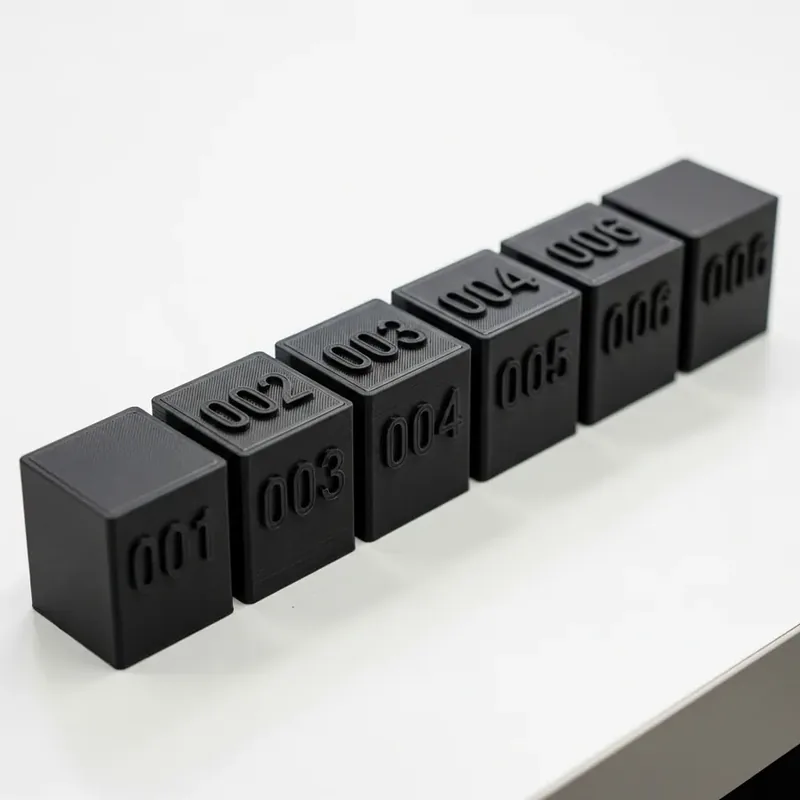
250 units
Typical lead time: 5-7 working days · Shipped UK-wide next-day
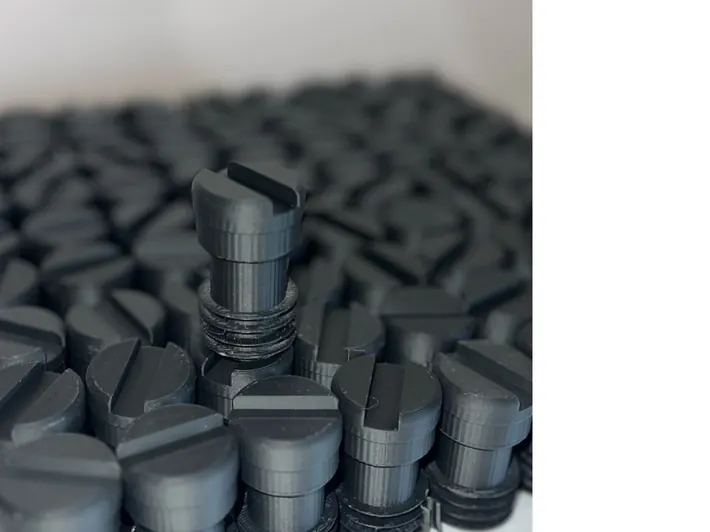
Macro photo of a 3DPE batch run · approximately fifty identical small black knobs printed and laid out for QC

Small batch 3D printing in the UK — production runs from 10 to 1,000+ units, no tooling, shipped from Bournemouth.

A complete small-batch 3D printing service for UK product teams and DTC brands. Test sample first, full batch second — only once you've approved the unit. From product development and CAD design through to print-and-fulfil dispatch, in your choice of engineering materials.

9,500+ parts shipped from 3D Printing Express this year · UK 3D printing service, Bournemouth

RELIABILITY
9,500+
parts shipped this year
SPEED
72 hrs
time to receive your part
COMMUNICATION
1h 46 min
average first reply
Year-to-date · 3DPE internal data · updated daily, last verified

Service details and case studies

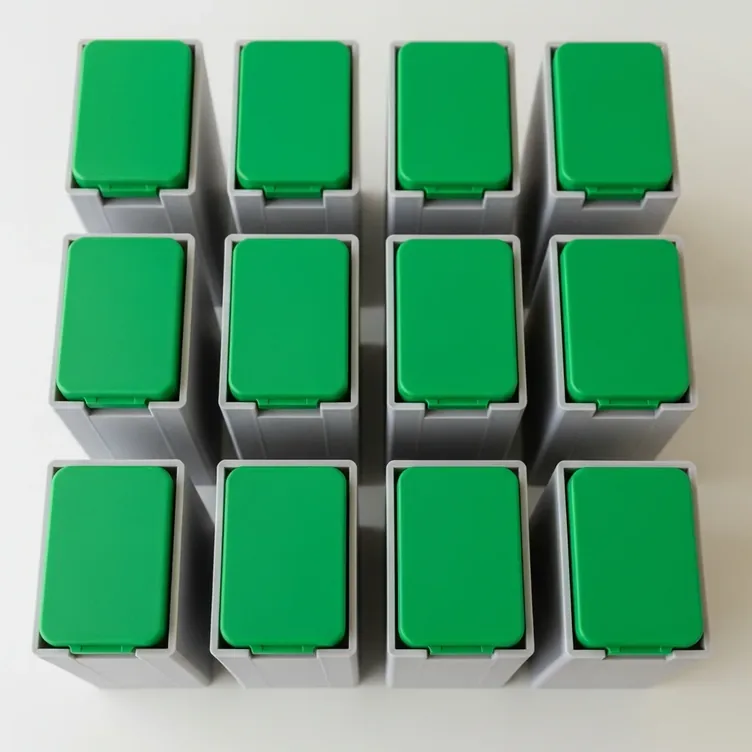
Durable case study · batch of identical 3D-printed grey storage bins with bright-green snap-on lids
Durable

Grey storage bins with green snap-lids · batch run
Multi-part batch run · colour-consistent across the whole batch · test sample approved before the run
Read the case study →
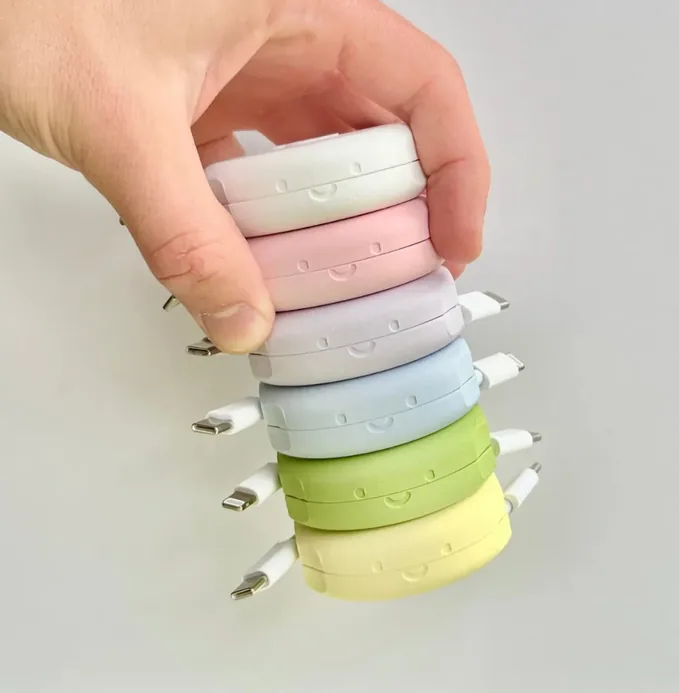
Pebbl case study · stack of pastel-coloured 3D-printed retractable cable winders held in hand
Pebbl

Retractable cable winders · pastel colourway run
Pastel colourway batch · colour-matched across the run · UK-printed and shipped
Read the case study →
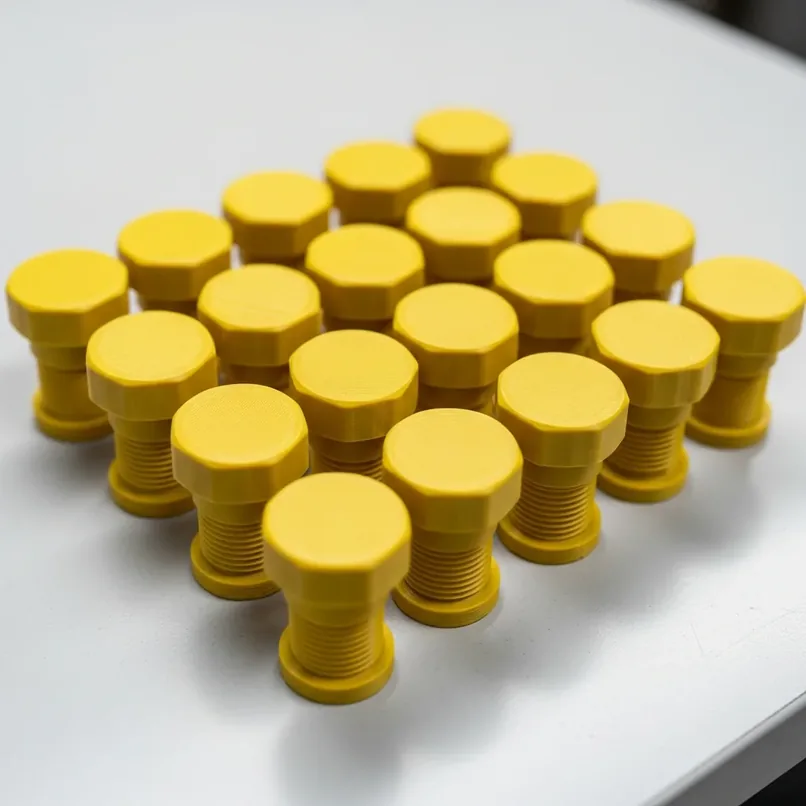
Whale Tankers case study · batch of identical 3D-printed bright-yellow threaded filler caps lined up in rows
Whale Tankers

Branded yellow filler caps · batch run

Branded threaded filler caps · colour-matched yellow across the batch · UK-printed and shipped
Read the case study →
Small-batch 3D printing compared with a prototype shop and traditional injection-mould tooling, across typical order size, setup cost, lead time, mid-run design changes, complex geometry and best use.
 Prototype shop3DPE small-batchTraditional tooling route
Typical order1 unit10-1,000+ units500+ units MOQ
Setup costNone£0 tooling£3,000 to £20,000+
Lead time2-5 days4 delivery tiers4-8 weeks
Design changes mid-runNot typicalYes, before batch goesExpensive retooling
Complex geometry✓ one-off✓ at scale✗ mould-limited
Good forProving a conceptUnits 10 to 1,000+1,000+ identical units
Freddy from 3DPE holding a finished 3D print · ICP photo

If you're scaling 20 to 1,000+ units a month

You've moved past prototyping, but injection moulding doesn't make sense yet. Maybe it never will. You want production-grade parts, repeatably, without the £10k tooling bill. Not sure where you sit? Read 3D printing vs injection moulding for the crossover, or is 3D printing strong enough for functional parts if durability is the question.

  • Product developers + DTC brands shipping 50 to 500 units a month, iterating on design month-to-month.
  • Procurement + event buyers needing 200+ branded pieces for a campaign, with a deadline.
  • Bridge manufacturing · producing real units while a mould is being cut, so sales don't stall.
01

Consistency across the batch

One spool per batch. QC on unit 1, midpoint, and last unit. You'd have to dismantle our logs to find a part that isn't the same.

02

Parallel production capacity

Multiple printers running in parallel mean a batch lands far sooner than a single-printer shop could manage. Deadlines land where we said they would.

03

No tooling tax

You pay per unit, not per project. Change the design between batch 1 and batch 2 with zero retooling cost. Try that with injection.

Some designs aren't a "cheaper mould" question. They're a "no mould can make this" question.

Injection moulding needs parts to release from a cavity. That single physical constraint rules out a huge chunk of modern design: interlocked mechanisms, sealed internal channels, lattice infills, variable wall thicknesses, one-piece flexures. The parts below aren't exotic. Product developers at 3DPE make them regularly.

If your design has any of these features, you're not choosing between 3DP and moulding. You're choosing between 3DP and not making the product.
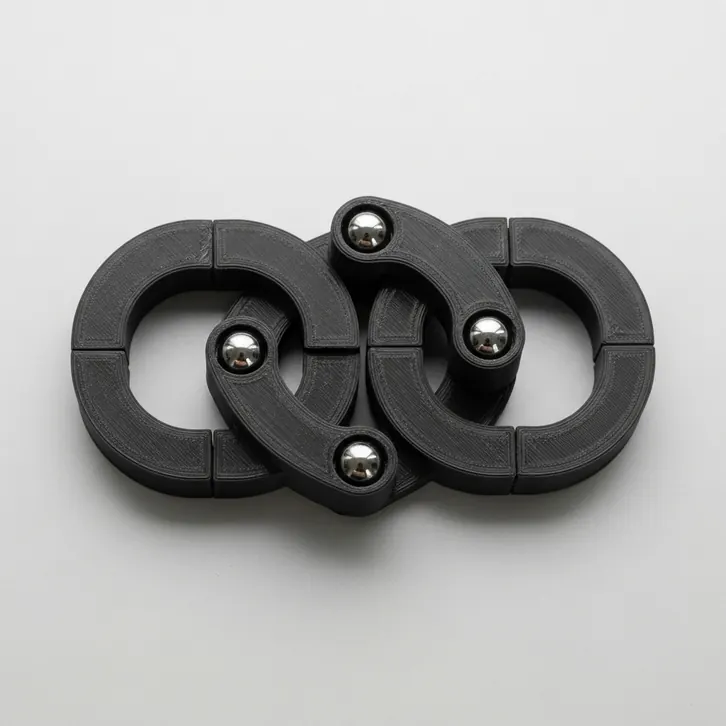
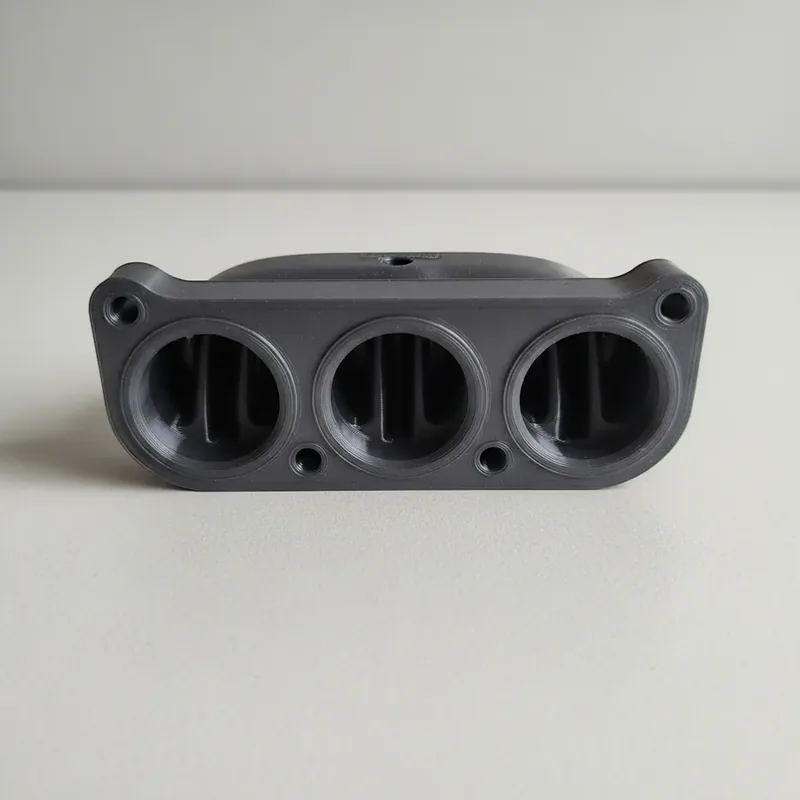
Articulated 3D-printed mech-figure parts

Interlocked + articulated

Chains, hinges, joints printed as a single piece. No assembly. Moulding can't make linked parts that never separated.

3D-printed turbine impeller showing internal flow geometry

Internal channels

Fluid paths, air flow, sealed cable routes. A mould tool can't form geometry inside solid material · a printer just doesn't print there.

3D-printed knee mechanism · topology-optimised structural part

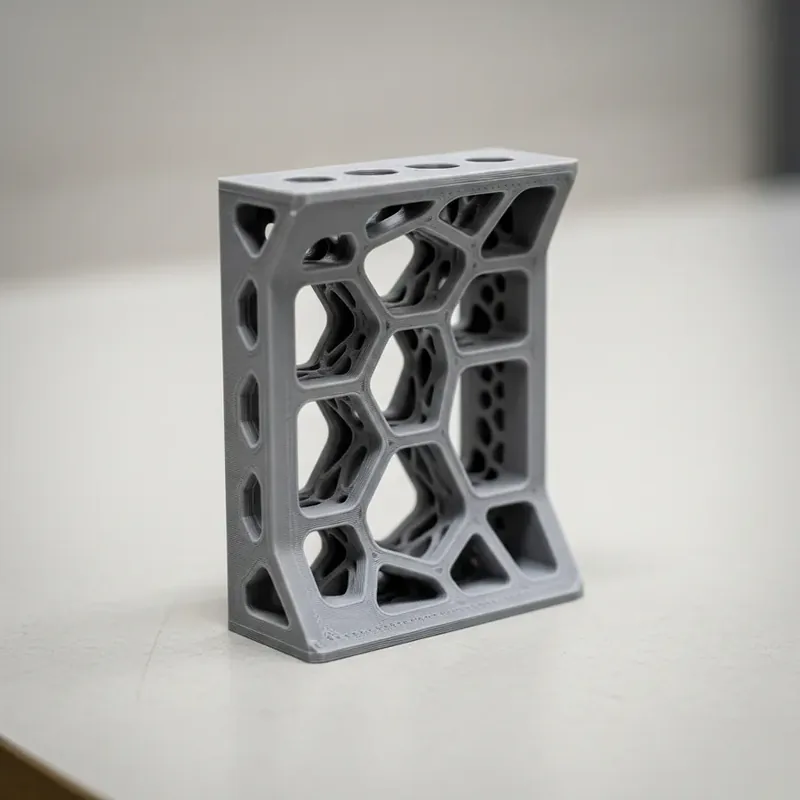
Lattice & topology-optimised

Internal gyroid, honeycomb, stress-led rib structures. Half the weight, most of the strength. Impossible to demould.

3D-printed mounting bracket with one-piece flexure detail

One-piece flexures

Single-material springs, snap-fits, clip housings with compliant zones. 3DP holds tight tolerance and custom stiffness; moulding forces two parts.

3D-printed furniture fittings with variable wall thickness

Variable wall thickness

Thin where it can be, thick where it has to be · in the same wall. Moulding needs uniform thickness for flow; 3DP doesn't care.

3D-printed resin blocks with stamped serial codes · per-unit customisation

Per-unit customisation

Every unit in a 500-piece batch can be uniquely serialised, sized, or numbered. One mould makes 500 of the same thing · full stop.

  1. 1

    Print audit & optimisation

    We adjust your file for batch production · orientation, supports, wall tuning. No CAD yet? Send a photo, a sketch, or a sample part · we can work from any of them.

    Disarms · "will the file print well at scale?"
  2. 2

    Spec confirmation

    Colour, material, finish, tolerance. All locked in writing before we touch a printer. If any of it matters, we check with you.

    Disarms · "wrong part delivered"
  3. 3

    Test sample out ASAP

    One unit shipped to your desk. Hold it. Test it. Use it. Nothing else prints until you've approved.

    Disarms · "unit 50 won't match unit 1"
  4. 4

    Full batch & dispatch

    Only after your green light. QC on first, midpoint, last unit. UK-wide next-day shipping.

    Disarms · "I'm trusting £X before seeing anything"

See full material range and TDSs →

From £30

Batches from £30 · vs £3,000+ in tooling to get started elsewhere.

No minimum order, no setup fee, no mould to pay for. You pay per unit, plus material and any post-processing.

What drives the final number

  • Unit count (volume changes the rate)
  • Material choice
  • Part size & geometry
  • Print quality + layer height
  • Post-processing (sanding, paint, assembly)
  • Deadline (rush = priority queue)
Every job defaults to Standard. If you need it faster, we offer three paid tiers that move you up the print queue. Pricing scales with job size and how far we need to flex the schedule · quoted per job, no published rates.
Tier · default

Standard

Our default lead time, based on your order size and current queue. Every job gets engineer review, test sample, and QC.

No surcharge
Tier · paid

Fast Track

Your job moves up the queue. Delivered meaningfully faster than Standard while still fitting around our regular schedule.

Enquire for pricing
Tier · paid

Priority

Your job takes priority over Standard work. We can often start printing the same day you sign off on the spec.

Enquire for pricing
Tier · paid · top

Express Delivery

We pause other work to get yours out first. Fastest possible turnaround from brief to dispatch · the option for "it has to be there by Thursday" deadlines.

Enquire for pricing
How the uplift is calculated: surcharge scales with order value and how far we need to flex the schedule. Small job, small uplift. Big job on a tight deadline, larger uplift. Every quote spells out the exact surcharge before you commit · no hidden fees.
"What if unit 50 doesn't match unit 1?"

Every batch uses one spool across the run. QC on unit 1, midpoint, and last unit. Our test-sample step means you've already approved unit 1 before the rest are printed.

"How tight can you hold tolerances across the batch?"

FDM holds practical, repeatable tolerances on most features · fine for the great majority of functional parts. We spec the tolerance target with you up front, and if a feature needs a tighter band than FDM can reliably hold we'll tell you straight before we take a penny.

"I don't have a CAD file, just a sketch or a broken part."

Send it anyway. Re-engineering from a photo, sketch, or sample part is our day job. We'll quote the CAD work separately · and if it's under £300 it's often included (see the bonus below).

"Is our design safe with you? We're pre-launch and paranoid about leaks."

NDAs signed before the file lands. Your drawings, CAD, and physical parts never leave 3DPE. No outsourcing, no sub-contracting overseas · every part printed on our UK floor by James or Freddy.

"Can I move to injection moulding later?"

Yes · and we'll hand over the files clean. Batch 3D printing is often the bridge while tooling's being cut. Nothing about our workflow locks you in.

"What about a re-run next month?"

We keep the print profile on file. Re-runs are faster + cheaper (no re-audit fee). If you want a standing retainer on monthly quantities, we'll set it up.

01

Test sample before the batch

You see, test, and approve one real unit before a single other part is printed.

02

Reprint guarantee

If a part fails on first intended use, we reprint it at our cost. No questions.

03

24-hour quote or 10% off

Send a brief, you'll have a quote inside 24 hours UK business time. Late quote? Your next job is 10% off.

Need us to print, pack, and ship to your customers?

We run a full turnkey service for DTC brands · print, sand, assemble, pack, and drop-ship direct to your end customer. One PO from you, one courier ID back. No warehouse, no logistics tangle.

See how print-and-fulfil works →
PrintSandAssemblePackShip
Bonus
£300
worth of CAD work

Don't have a CAD file? We'll build it. Free up to £300.

Send a sketch, a photo, a measurement, or a broken part. If you go ahead with the batch, the CAD work is on us up to £300 of engineering time. That's roughly the cost of a full reverse-engineering pass on a fist-sized part · enough to get most batches into production with zero upfront design cost.

Above £300 we'll quote the CAD hours separately · always agreed in writing first.

10 TO 1,000+ UNITS · NO TOOLING · NO MINIMUMS

Got a batch brewing? Send us a file, a target unit count, and a deadline. We'll come back in 24 hours with a quote and a plan.

You'll hear from James or Freddy · not a form reply. That's the whole process.

Claim Your Free Batch Sample Request a Printability Audit
Default lead time depends on batch size: 3-5 working days for small runs (under 50 units), 5-10 days for the 50-500 sweet spot, 10-14 for 500+. If you need it sooner, the Fast Track, Priority and Express Delivery tiers move you up the print queue. Average lead time across all jobs is under 72 hours quote-to-dispatch.
STL, STEP, OBJ, 3MF, IGES · anything industry-standard. No CAD yet? Send a hand sketch, a phone photo, or a sample part. Re-engineering from non-CAD inputs is our day job, and the first £300 of CAD work is on us if the batch goes ahead.
Yes. Sanding, paint, assembly, packaging, and direct-to-customer drop-shipping. The full pathway runs Print → Sand → Assemble → Pack → Ship under one roof. Tell us the finish you need on the brief and we'll quote it as part of the batch.
We comfortably do 10 to 1,000+ units in a single batch. Above that we'll typically split across staged dispatches · first 200 in a week, the rest queued · so you're not waiting on the full run before any units land. Multiple printers running in parallel mean a large batch lands far sooner than a single-printer shop could manage.
Yes. We keep the print profile on file after the first batch (orientation, supports, wall tuning, colour, material, finish) so re-runs skip the audit fee and start faster. If you want a standing retainer on monthly quantities we'll structure that with predictable lead times and a fixed per-unit rate.
From £30 per batch with no minimum order, no setup fee, no tooling cost. You pay per unit plus material. The final number depends on unit count (volume changes the rate), material choice, part size and geometry, print quality and layer height, post-processing, and deadline (rush queues use the Fast Track, Priority and Express Delivery tiers).
For 10 to 1,000+ units, usually yes. There is no tooling to pay for, so a batch starts from £30 instead of £3,000+ in mould tooling before your first part exists. 3D printing also makes geometry a mould cannot, like enclosed channels, single-piece hinges and internal lattices. Injection moulding only pulls ahead at very high volumes where the tooling cost spreads thin.
Low volume 3D printing is almost always cheaper up front. Moulding needs the tool made first, typically £3,000+, before a single part exists. With small batch 3D printing you pay per unit plus material from £30 a batch, no setup fee and no minimum order, so the maths favours printing well into the hundreds of units.
There is no minimum order. We run from 10 to 1,000+ identical units, and you can start with a single approved test sample before committing to the full batch.
Yes · low volume manufacturing is exactly what small batch 3D printing is. We produce runs of 10 to 1,000+ units from our UK workshop in Bournemouth with no tooling and no minimum order, so it suits the volumes that sit between one-off prototyping and injection moulding. You approve a test sample first, then the full batch runs in your choice of engineering material, with QC on the first, midpoint and last unit and UK-wide dispatch.